
Most real estate joint ventures don't fail because the deal was bad — they fail because nobody can agree on the numbers. Two partners, one property, and eighteen months later: two different spreadsheets, two different memories, and one very awkward dinner. Almost all of it is preventable with accounting decisions made before the first dollar moves.
The failure pattern is remarkably consistent. There's no written agreement on the split — or there's a handshake version that each partner remembers differently. Money runs through personal accounts because "we'll sort it out later." One partner pays for a renovation on a personal credit card, the other covers the mortgage shortfall from their chequing account, and by year two nobody can say who has put in what.
None of this is dishonesty. It's what happens when a multi-year financial partnership runs on the record-keeping habits of a group vacation. We've written about what DIY record-keeping really costs in the real cost of DIY bookkeeping — a joint venture multiplies that cost by the number of partners.
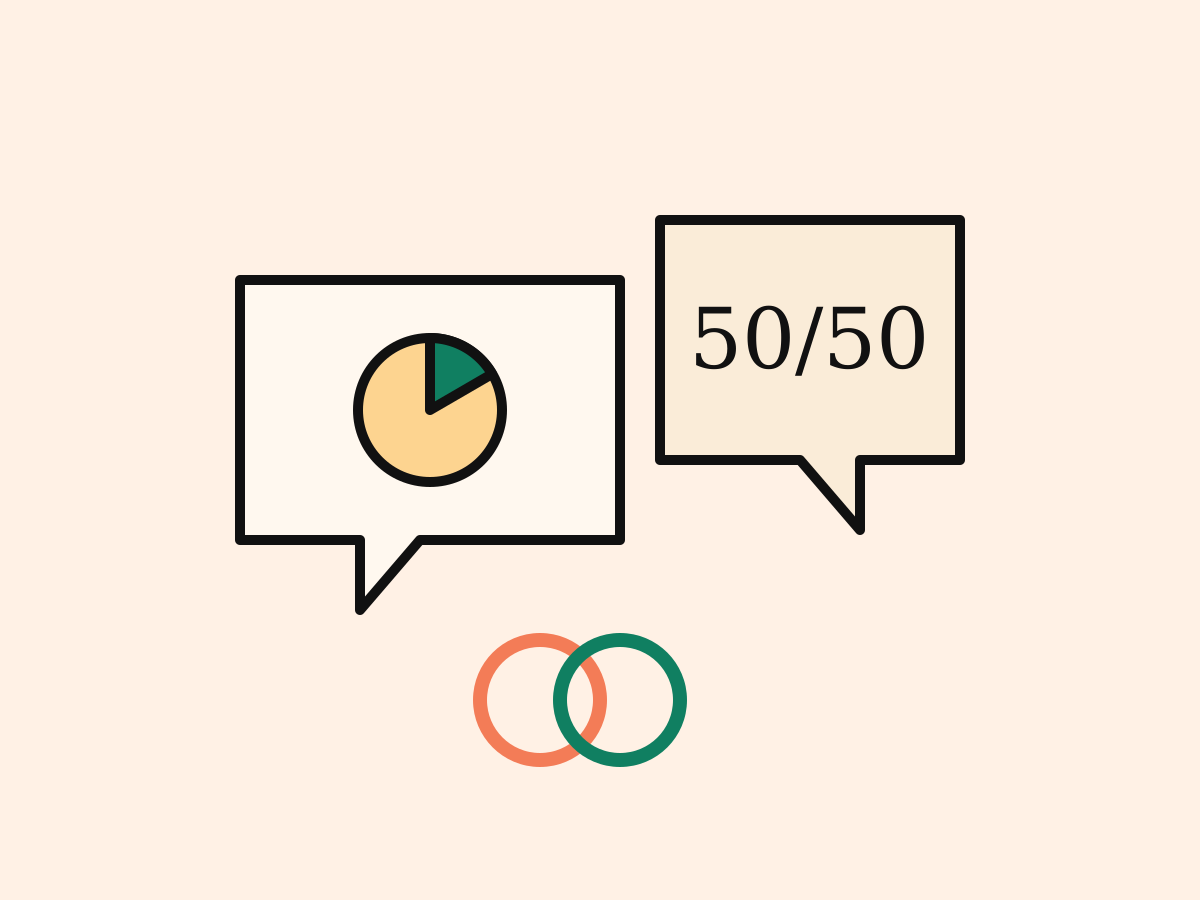
The single most important distinction in JV accounting: money a partner puts in is not the same as the profit they're entitled to. One partner might fund the down payment while the other manages the renovation; the agreement might split profits fifty-fifty even though the cash went in eighty-twenty.
That only works if the books track both numbers separately — a capital account for each partner showing contributions and draws, and a profit allocation that follows the agreement. Blur the two and every distribution becomes a negotiation. Track them properly and the answer to "what am I owed?" is a report, not an argument.
A joint venture isn't a taxpayer — the partners are. Each participant reports their share of the income and expenses on their own return, in line with the agreement and the actual arrangement. That raises questions worth settling early: is this a co-ownership or a partnership in the legal sense (they carry different reporting rules)? Does each partner claim capital cost allowance independently or not? Whose name is on the mortgage interest, and do the books support each person's claimed share?
Get these wrong and you don't just have a bookkeeping problem — you have two or three tax returns that contradict each other about the same property, which is exactly the inconsistency the CRA is well positioned to notice.
At minimum, a JV's records should include a written agreement covering splits, contributions, decision rights, and exit; a dedicated bank account that every project dollar flows through; a capital account per partner, updated with every contribution and draw; receipts and invoices behind every expense, kept for the CRA's six-year requirement; and a periodic statement each partner receives, so surprises surface quarterly instead of at sale.
That last one matters more than people expect. Most JV blow-ups happen at exit, when years of unexamined assumptions get reconciled in one high-stakes conversation. Partners who've seen honest numbers all along have nothing to discover.
The best time to build JV accounting is before the offer is accepted; the second-best time is now. We set up and run joint venture books through our real estate bookkeeping service — separate tracking per partner, statements everyone can see, records ready for each partner's accountant at tax time.
The takeaway: a joint venture is a financial relationship, and financial relationships survive on shared, trusted numbers. If yours is running on memory and goodwill, book a free consultation before the exit conversation forces the issue.
This post is general information, not tax advice for your specific situation.